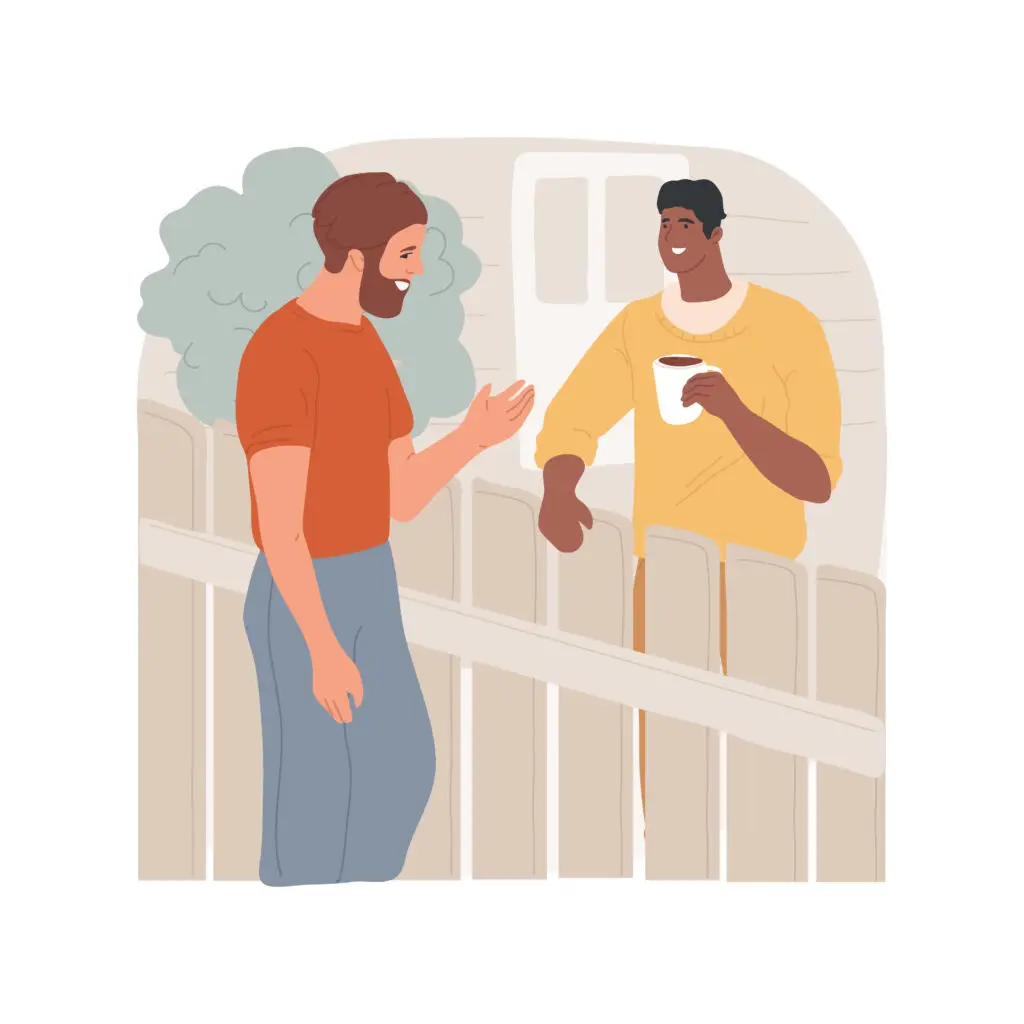

For some background information – if you are not already aware – on what boundaries are, and what healthy and unhealthy boundaries look like, please click on the link below:
Fear of ‘Disappointing’ Other People
Part of the reason life feels so unsafe for an adversely affected person is that they struggle to set boundaries. To set a boundary basically means to set the rules for relationships with others – these rules consist of how a person expects to be treated and what they will and will not tolerate. Boundaries are shaped by personal values and wider social values. Boundaries are asserted implicitly and explicitly. People can struggle with setting boundaries as they fear disappointing others or fear conflict, rejection or abandonment and all these reasons can keep a person in the fawning submissive survival strategy which means going along to get along and prioritising the needs of others over their own needs.
Not Knowing What a Boundary Is
Children of narcissists often have a double layer of defence regarding setting boundaries. Not only will they have realised in their younger years that they are not allowed to set boundaries as this will have led to punishment and rejection, but they may also have ‘forgotten’ what a boundary is. Many people get to adulthood and are astonished to discover what boundaries are. They have put them out of their mind as even being an option. It can be almost unfathomable to even think of saying ‘no’ to others or to not go along with others, or to imagine standing up for themselves. They may often find themselves frozen and mute in situations, for example, where they are being accused of something they have not done or when someone is talking a lot and they want to leave the conversation. People who struggle to set boundaries may be very agreeable and consider themselves to be laid back and while this may be true, it is often at least partly a lie that people tell themselves to hide the fact from themselves that they can’t set a boundary. This is not to say that they never stand up for themselves – there may be times when they can, assertively or forcefully, but it will usually be quite passive, i.e., pretending to be ill to get out of an arrangement after agreeing to do something they didn’t really want to do.
Not being able to set a boundary means that life in general and being around most (or all) people does not feel safe.
Once a person learns to set boundaries and stand up for themselves and can say no or whatever else they need to say, then life and being around people feels safer.
Inalienable Rights
It is an inalienable right to set boundaries. It can feel uncomfortable at first but also, it can be a behaviour that develops naturally during the recovery process and feels liberating. People begin to expect to be treated more respectfully and they no longer fear the potential conflict which may happen when they stand up for themselves. They desire more equal relationships than ones which may have suited them in the past. They may now prefer for all participants in a conversation to have equal air time rather than conversations being one-sided or them often being in the role of listener/sounding board/therapist.
Lindsay C. Gibson PsyD is a psychologist and author and at the end of her book ‘Recovering from Emotionally Immature Parents,‘ she has a long list of rights which is useful to read. It includes rights such as:
I have the right to say no without a good reason
I have the right to not be your rescuer
I have the right to refuse to feel guilty
I have the right to any and all of my feelings
I have the right to think anything I want
I have the right to not be ridiculed or mocked about my values, ideas, or interests.
I have the right not to do things if it’s not a good time for me
I have the right to spend my energy and time on what I find important
I have the right to live my life without ridicule from anyone
I have the right to be me
Some of these can be quite eye opening for a person who has not had the space to even think about these as options.
Recovery
To get to a place where a person can innately feel the above and other rights to be true, the following can be worked on:
Improving one’s self-esteem, self-compassion, assertiveness and ability to tolerate emotional distress and tuning into being more aware of emotions. The resources below are very good:
Self-Esteem
https://www.cci.health.wa.gov.au/Resources/Looking-After-Yourself/Self-Esteem
Self-Compassion
https://www.cci.health.wa.gov.au/Resources/Looking-After-Yourself/Self-Compassion
Assertiveness
https://www.cci.health.wa.gov.au/Resources/Looking-After-Yourself/Assertiveness
Tolerating Distress
https://www.cci.health.wa.gov.au/Resources/Looking-After-Yourself/Tolerating-Distress
and Noticing Emotions
Listening to emotions can provide clues as to what a person is really feeling. If a person is asked to go somewhere or work an extra shift or do someone a favour, they may on the one hand feel good because they are doing something for another person, and this may be genuine or it may be because it feels safer (unconsciously). But on the other hand, if a person is agreeing to go along with others as they don’t want to upset them or because they are ‘nice’ and ‘laidback’ then they will notice resentment building up and this is evidence of an inner conflict and means the person is likely to be people pleasing rather than doing that they would actually like to do.

Please see ‘Healing From Narcissistic Abuse’ and ‘The Healing Process (Power Point)’ below for more tips on how to heal and how the process works on a biological level.
Please see below for ways in which people handle situations when they struggle to be assertive: