

What is the Johari Window?
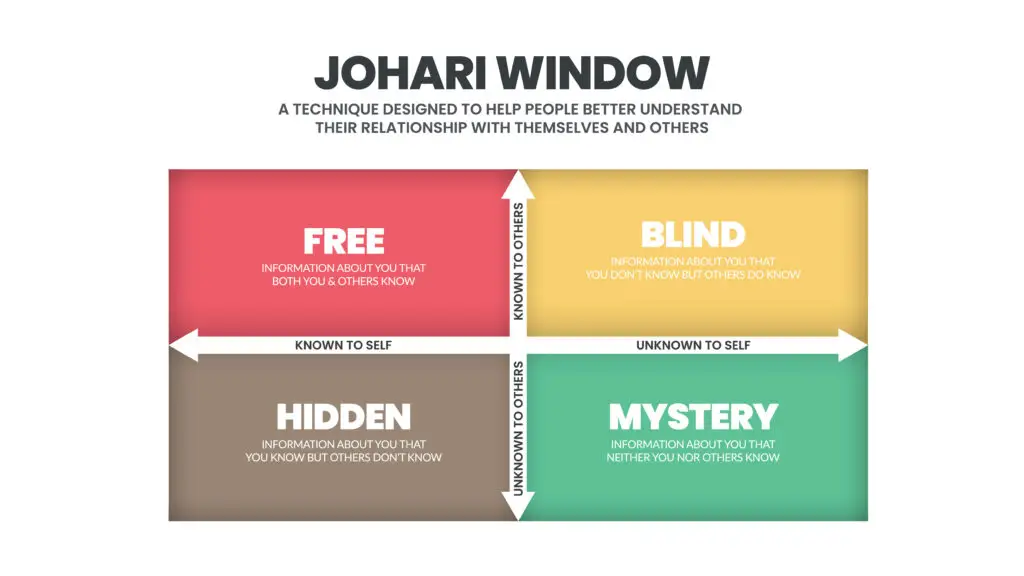
The Johari Window is a psychological tool which was developed in 1955 by the psychologists Joseph Luft and Harrington Ingham (hence JoHari – a combination of their names). It can be used to enhance self-awareness by exploring what is known and unknown to ourselves and to others. There are four quadrants which represent different areas of information. They are:
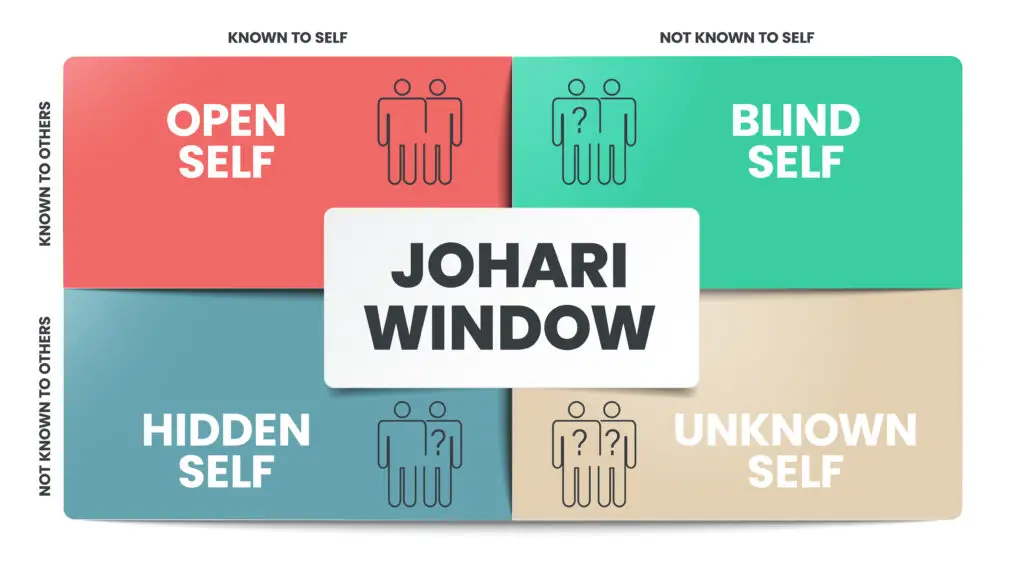
The Open Self – This an area that is known to the self and to others
The Blind Self – This is an area which is not known to ourselves but is known to others
The Hidden Self – This is the self which is known to ourselves but kept hidden from others
The Unknown Self – These are parts of ourselves which are hidden from both ourselves and from others
The areas of the self in each quadrant include; behaviours, habits, tendencies, fears, ambitions, beliefs and feelings.
The healthiest version of ourselves would have a large open self – meaning having a lot of self awareness and the ability to be open and authentic with others. This helps to foster closer relationships and easier communication. We can help ourselves in this area by being more open with others when appropriate and listening to constructive feedback from healthy people. Feedback can help us see our blind spots.
Of course, both of these can be a massive challenge for people from dysfunctional backgrounds. To be open can feel too vulnerable and like putting ammo into the hands of others to be used against us. Anything that seems like criticism can be incredibly triggering, feel like rejection and judgement and can make a traumatised person feel ashamed and want to be more guarded.
Relationships with romantic partners, work colleagues, friends and acquaintances can all feel fraught for many children of narcissists and it takes a lot of work to get to a place where other people do not feel anxiety inducing or terrifying. Recovery from the betrayal and pain of coming from a narcissistic family and learning to have faith and trust in others is a long but necessary road to be on to get to a better place in life.
Not everyone is a narcissist, as we know intellectually, but our nervous system and our defences react to others as if that were true.
A tool like the Johari Window is useful in self development and in, somewhere down the road, building healthy relationships with healthy others.